Showing posts with label Old School. Show all posts

Monday, October 6, 2025

Dragonlance Adventures Review


 Here we come to Dragonlance, the High Fantasy world created by Tracy Hickman for TSR.  Today, I'll be reviewing the Dragonlance Adventures book for Advanced Dungeons and Dragons first edition.  Dragonlance is a world of war shaped by love.  At least I'm paraphrasing what Dragonlance is about. The setting of Dragonlance is the world of Krynn.  A world smaller than our Earth.  Although I wish it could have been bigger.  Dragonlance Adventures was originally written by Tracy Hickman and Margaret Weis.  It was published in 1987 by TSR, inc.  I borrowed the book from a friend, fell in love with the setting.  Now years later, I bought my own copy of the game world (I'll be working on a review of the DLCS (3.5e) later).

 Dragonlance began as a series of modules, starting with  Dragons of Despair and ending with Dragons of Triumph.  That was forty years ago. 

 What it contains 

Dragonlance  the book is separated into chapters. The first part of it deals with the Universe of Dragonlance as the people of Ansalon see it. The dragonlance world is on three philosophic pillars: Good, Evil, and Neutrality.  There are three philosophies of these pillars are: Good Redeems its Ownor the law of Paladine, the supreme Lawful Good god; Evil Feeds Upon Itself, or the law of Takhisis the Dark Queen; and Both Good and Evil Must Exist in Contrast, which is the law of Gilean, the supreme Neutral God.  A fourth law exists that is important: The Law of Consequence: which was given by the High God himself.  A proper Dragonlance campaign is built around these four laws.  Promoting the power of truth over injustice, good over evil, and granting good consequences for good acts, and bad consequences for evil acts.

The next section talks about one's lot in life. There are three new classes in Dragonlance that are discussed: the holy orders of the stars, the knights of Solamnia, and the Wizards of High Sorcery.  A member of the Holy Orders of the Stars worship one of the eighteen true gods of Krynn. Which are manifested as constellations in the sky.  The knights of Solamnia is an order of knights dedicated to Paladine, Kiri-Jolith, and habakuk.  The Wizards of High Sorcery gain their power from one of the three moons that orbit Krynn.


Besides the dragons, which are divided into good and evil dragons; there are three races of Krynn created by the Gods to represent an ideal.  The first of these are the Elves, which are created by the good gods of Krynn.  For them, they can choose good or evil, but mostly choose good.  Ogres, which used to be the most beautiful of all the races, were created by the evil gods of krynn.  They allowed their abuse of power to warp their minds and bodies.  The last of the races to be created where the humans, created by the gods of neutrality.  They were given the right of free agency, to choose good or evil themselves.  After these races came all the others.  Gnomes, goblins, hobgoblins, dwarves, kender, and so on.  Some of these came about because of the Greygem of Gargath.  Others are offshoots of the original races. The draconians, however, are a perversion of Good dragons.  Although late in the War of the Lance, the ritual that created the evil draconians was performed on evil dragon eggs, creating good draconians instead.


As we continue with going into Dragonlance Adventures, one learns that alignment has a definite effect on what is available.  A Wizard of High Sorcery, for instance, has his or her spells chosen from different schools based on his or her alignment.  A White Robe is limited to certain spells which are considered good.  A Black Robed wizard is also limited to certain spells which are considered to be evil.  A Red Robed wizard has the greatest amount of spells to choose from.  Alignment is also tracked in the game based on the players' choices.  In one dragonlance game I was in, I played Raistlin and he eventually became a good guy in the game.

The new classes are eventually discussed after races.  Each new class is renumerated.  Beginning with the Knights of Solamnia. There are three orders of knights, beginning with the Knights of the Crown, then the Knights of the Sword, and finally the Knights of the Rose.  The knights of Solamnia are three orders of knights for good on Ansalon.

The Tinker gnomes come next.  Most, if not all, Gnomes are tinkers.  They constantly love to make new contraptions.  Their technology rivals that of Victorian England; and they have never seem to advance higher.  Their contraptions also prevent the other nations of Ansalon from developing technologically past the Steel age.

After that is my favorite class on Krynn, the Wizards of High Sorcery.  Basically they are magic users, but they draw their powers from the three moons of Krynn.  The Orders of High Sorcery are also divided into three: the White Robes of Solinari, the Red Robes of Lunitari, and the Black Robes of Nuitari.  Those wizards that wear the white tend to be good, those that wear red tend to be neutral, and those that wear black make wickedly evil choices.  Of course, the Wizards of High Sorcery may choose their order, and the color of their robes, after taking the Test. After that, a few new spells are described according to the D&D game.


 After that, the Holy Orders of the Stars are discussed.  There are three orders of clerics on Ansalon.  There are the good clerics, which represent the gods of Good.  Then there are the neutral clerics, which represent the gods of Neutrality.  And finally the evil clerics, which represent the gods of Evil.  Each draw their magic from these gods of their order.

 Next, the races are given statistics.  But the races' origins are explained in this section of the book.  I have already mentioned their origins before in detail.  But there are some differences that should be noted. 
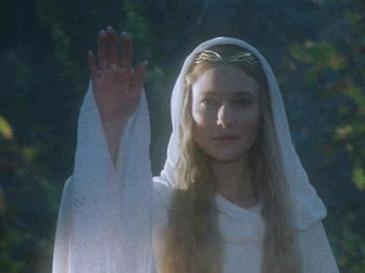
 

If the Elves were united on Krynn in the past, in the present day they are divided. The elves are divided into the Silvanesti elves (high elves), the Qualinesti (wood elves), the Kagonesti (the wild elves), and the Dargonesti and Dimernesti (or sea elves).  All of them are created to be good, by the Good gods.  However, they have been divided and not united as one race.  Which is a shame, really.  However, they are one of the few races that can go up to the Towers of High Sorcery and learn magic.

The dwarves come after the elves.  The dwarves are divided into a number of clans. But for game purposes, the dwarves are divided into Hill Dwarves, Mountain Dwarves, and Gully Dwarves.  There are evil dwarves, but they aren't included in Dragonlance Adventures as a race you can choose to play.  After this, comes the Ogres as player characters.  The ogres are divided into Irda and Minotaurs as playable races.

Character skills are discussed as a final on the Character chapter. After that we get into the unique Creatures of Ansalon.  The first of these creatures are the draconians.  Starting with the spell wielding Auraks, then the Baaz, and the rest.  Each of them a perversion of Good dragon eggs. After that, we get AD&D stats of the other creatures of Krynn.  Of course, most of these new creatures are described in more detail in later products.  Of important note are the dragons. Each of the dragons of Krynn are noted, and each are power incarnate.  After that, two of the Gods are described as dragons, Takhisis and Paladine.

 Ah, so much material packed.  We go on to the world that was.  This chapter describes the world of Krynn in the past.  There is even a map provided as Ansalon as it was during the Age of Might.  This chapter goes into detail about Huma, Magius, and Fistandantilus. It also talks about Astinus (who looks like Gilean for some reason).  After that comes a section of magical items in Krynn.  Included are potions, scrolls, medallions of faith, and other items.

Then comes the chapter on the War of the Lance. Here, the heroes of the lance are described, and along with the world of the Dragonlance Saga.  While these characters are also introduced in the Dragonlance modules (and yes, I bought them from Drivethru), their older and more powerful versions are given here.  Also given is a map of the continent of Ansalon during the War of the Lance.  After that are appendices given of what AD&D monsters are in Ansalon, a race chart, a character alignment tracking chart, and other important tables and charts.

In Conclusion

In one hundred twenty-eight pages we get the whole lands of Krynn and everything you need to run a game for AD&D.  And both Tracy and Margaret has packed a lot of information about the world of Krynn and how to run it for the AD&D game.  However, the material in this book is, rather, dated.  Of course, the DM's Guild supports the world of Krynn for D&D 5th Edition.  And people have been putting out works for Dragonlance for D&D 5th.  However, with the new direction Wizards has going for 5th Edition onwards, Dragonlance seems dated and packaged for a different audience.

So, what about Dragonlance in the future?  Well the future is uncertain.  It really seems that Wizards isn't taking care of their brands very well.  They are probably changing them for their new vision of D&D.  One thing is for sure, Dragonlance classics, as this book, are available on Drivethru for print and digital.  I suggest buying a copy of both.   After all, Wizards won't change the old books (including the DLCS, which will be reviewed later.)

Saturday, October 4, 2025

Strixhaven: a Curriculum of Chaos Review


The mission of Strixhaven University is to discover and preserve magical knowledge, to disseminate that knowledge from one generation to the next, to promote free and open study of magic in all its forms, and to enhance the lives of people through out the world through the use of magic.

-- Strixhaven mission statement

 Hello everyone, today I'm reviewing Strixhaven: a Curriculum of Chaos for Dungeons and Dragons. I received the book from Amazon and have been reading it forwards and backwards. This book was produced and released in November of 2021, and it describes a magical University setting coming out of the Strixhaven set for Magic: the Gathering.  Strixhaven: a Curriculum of Chaos is a Wizards of the Coast product.  The original designers for Strixhaven are Doug Beyer, Taylor Ingvarsson, Jess Lanzillo, Meris Mullaley, Fox Allison, Annie Sardelis, Emily Teng, Andrew Vallas, James Wyatt, and Art Zirulnik.

 Strixhaven University is a college setting that is set in the World of Arcavios.  It was originally a Magic: the Gathering product produced by Wizards of the Coast.  Apparently, the people at Hasbro felt that it was such a success that they told Wizards to cross it over in D&D.   And so they did. What we got is Strixhaven: a Curriculum of Chaos.

First of all, I think this product is twenty years too late. With the Harry Potter craze in the early nineties as well as the early 2000s, this product could have cashed in on the Harry Potter mania that swept the world with the Harry Potter movies. However, we know that Wizards did approach J.K. Rowling about doing a Harry Potter roleplaying game based on then, the d20 System.  She didn't like the idea. However, great ideas take time.  I think, while not a direct translation of Hogwarts to D&D, you can't help but wonder if Strixhaven was actually inspired by Harry Potter.


 Strixhaven, itself is divided into seven chapters, although most of the relevant information is in the Introduction.  Unlike Hogwarts, which is designed to teach very young wizards and witches, Strixhaven is an University.  Designed to teach older, college age kids.  Strixhaven's university is laid out like Cambridge or Oxford.  There are colleges mixed in a town.  Currently, there are five colleges. The first college is Lorehold, which explores the past and preserves the history for future generations.  It was founded by the dragon Velomachus Lorehold.

Second is Prismari College, and students of Prismari use the elements to practice the arts.  It was founded by the dragon Galazeth Prismari. Quadrix college is third, and it focuses on the mathematical aspects of nature.  Quandrix was founded by the dragon Tanazir Quandrix.

The fourth college of Strixhaven is the Silverquill college.  Students of Silverquill study the magic of rhetoric, poetry, oration, and writing. It was founded by Shadrix Silverquill.  The last is the college of Witherbloom.  The college teaches the magics associated with life and death. The founder was the dragon Beladros Witherbloom. 

Although the University can be placed in any world, again the University takes place on the world of Arcavios.  The world itself was formed when two other worlds collided and coalesced into one.  At least according to Arcavian legends.

Chapter One of the book goes over life on Campus. It gives an overview of the entire University.  From the Central Campus to the various colleges.  And there are maps to the whole thing.  This part of the book isn't very detailed, allowing players and DMs to fill in the blanks with their own creativity.  although there are a few locations that are given detail, DMs and players can fill in the blanks and cracks.  This is a good thing about the book, in my opinion.


 Chapter two of Strixhaven provides Character Creation details for Dungeons and Dragons 5e (2014). It introduces a new race called the Owlin, and provides character options for different characters, although I feel that the whole world is geared towards mages.  But there are options for the other classes of D&D.   Included are new feats, new spells, and new magic items.

  The next four chapters of the book include a campaign designed to take Freshmen (level 1 characters) to all the way to the end of their senior year (level 10).  Naturally, this is the part I don't like.  The adventures, which will go down in history as being classics for adventures set in a school; are not what they could be.  That is, adventures that actually challenge the characters according to the classics.  While fun (I've seen the adventures run in action), and people could have fun with it, because of space they are lackluster and lack potential.

Chapter seven includes the monsters of Strixhaven.  From the dragon founders, right down to the students.  This chapter contains stat blocks for forty different new monsters.  From those who learn to those who are trying to undermine the college.  They are all there.  In the back of the book is a map you can tear out.


 Hits

The art in the book is beautiful.  Taken from the Magic: the Gathering cards, the art is expressive, full color, and bring Strixhaven to life.  Wizards hits it out of the bull park with the art.  The art is expressive, gorgeous, and takes you to a world where the University of Strixhaven could exist.  The art is Realistic.  Whether oil paintings, or digital, it's very expressive.

The  layout of the physical book is two columns, with no justifications.  The book is laid out so it's a fast read.  With a simple layout such as that, I suggest getting a copy of the physical book.  I must have read it ten times before doing this review.

Misses

 The book could have been bigger.  The art of storytelling is part of roleplaying.  The adventures seem rather luckluster.  More could have been a part of the adventures.  They could have actually got real storytellers to work on the adventures and make them better.  The villain in the story is well developed, but when you see the art for him, he's rather comical.  They should have focused on the Oriq, as they are real threats to the campus than a bullywug looking for revenge.

 The Future

 So, what holds to the future of Strixhaven?  Well, that remains to be seen.  There is a rumor that Magic the Gathering might return to Strixhaven for their 2026 line up.  If you play Magic the Gathering, this is good news to revisit the world of Arcavios.  However, I must tell you that I bought the book for business purposes.  I'm going up to Wizards of the Coast to buy the copyrights and trademarks to eight campaign settings, and Strixhaven is one of them.  I'm also buying the copyrights and trademarks to D&D 3e.  I'll own Strixhaven.  I'll be able to develop Strixhaven for Dungeons and Dragons 3.0.

Is this what the future holds?  Well, I'm old school D&D, and Old School is best.  There are things that can be done for Strixhaven to improve on it.  Especially in the adventure department.  But we will see what the future will hold.  Maybe Wizards will change their mind and not let me have Strixhaven.

Thursday, February 8, 2024

Advanced d20 Magic Review


Advanced d20 Magic cover


Advanced d20 Magic is the best magic system for Dungeons and Dragons, hands down.  A no level approach to magic, it's a system that does require math to work out.  All you are doing is add and subtract for this game system -- simple mathematics, really.  No Calculus is needed for this system.  This system is devised by David and Michelle Lyons for the Slayers d20 game by Guardians of Order (now owned by White Wolf, which is owned by Paradox Interactive).  Now, in this version, David and Michelle Lyons brings the magic system of the Slayers fully to regular D&D.

How the System Works

The system, called Dynamic Spellcasting, works by treating every spell at default like a spell you can cast at a single action as a stilled and silent spell.  As long as you are prepared to resist the drain (this part works like Shadowrun's magic system).  You cast a spell, and then you make a fortitude save to resist drain.  In BESM d20 games, this means you suffer drain of your energy points.  In regular d20, if you aren't using the optional Spell Points system from Unearthed Arcana, you suffer non-lethal damage for casting a spell.  How much damage depends on how powerful the spell is.

By Anthony Cournoyer.

A spell like fireball (Casting DC 31) will have you resisting 1d10 damage, for instance.  While a spell like wish (Casting DC 101) would have you resisting 16d10 damage.  As a result, you'll have more success casting spells with a lower Casting DC than a higher one.  Each spell has a Casting DC.  Which is the Difficulty Class of your fortitude drain.  But don't worry, you have the tools to reduce the punishment.

Forms and Focusing Agents

The system presents a number of forms to increase your chances of casting a spell. These include Invocations, Incantations, and Rituals.  An Invocation is one where your mage casts spell by invoking it's name -- loudly.  Everyone will know what kind of spell your casting when you invoke the spell while gathering it's energies.  That gives you a +5 bonus to your roll.  Another thing you can do is make an incantation.  This means you ritually chant while gathering the spell's energies.  This offers another +5 bonus to your roll. They stack, guys.  Additionally, you can cast it as a ritual, which offers a bonus depending on how long you do the ritual. That also stacks.

Additionally, you can add a focus to the roll.  This can be either basic (like a Divine Focus -- ie. your holy symbol) or an expendable focus (like bat guano for fireball).  These can offer +2 or +1 (or both) to your roll. Finally, you can make an investment of body (sacrificing hit points) and/or an investment of mind (sacrificing a number of experience points to cast your spell).

Metamagic Feats and Dynamic Spellcasting

 Two metamagic feats are included in the Casting DC of each spell -- Still Spell and Silent Spell (see the D&D 3.5 Player's Handbook or Pathfinder Roleplaying Game Core Rulebook).  You can cast any spell as one standard action as a still spell and silent spell.  The invocation and incantation forms just makes this easier. Adding any other metamagic feat (or a combination of metamagic feats) to your spell increases it's Casting DC.  Thus it makes the spell harder to cast. But worth it if you can pull it off.  

There are other rules to consider.  There are rules for cooperative casting, multiple spells, what happens if two different spells are cast -- and if they cancel out. There are rules for spell resistance, and controlling the magic if you fail your fortitude saving throw. Learning a new spell takes a number of slots.  A spell like goodberry would take one slot to learn, while wish would take four slots to learn. 

By Shaman's Stock Art (Anthony Cournoyer)

Even learning new spells are easy with this system.  All you need a copy of the spell and/or a teacher.  You learn the spell with a basic Knowledge: Arcana check or a Spellcraft Check with a DC that is -10 the Casting DC.  Thus, learning fireball only takes a DC of 21 to pass.  Easy enough, so far.  Inventing a spell with this system also is easier. You just need to work with your DM/GM and he sets the learning DC, and you have to pass the check to learn the spell.

Magical Characters

This chapter shows how you can use the system with existing rules.  For instance, it balances out the Dynamic Sorcerer class.  And then there is the magic attribute, and that is handled by this system.  Plus, each magic using character class in regular d20 is converted to this system.  For instance Sorcerers have 80 slots to learn spells, but get magical drain resistance.  Wizards can learn any spell they please, and divine spellcasters take one round to cast their spells.

Magic Items

There is a system for handling magic items. Again, you have to roll against DCs to make magic items, but you can add the spell needed and make the required investments of mind to make the magic item.  Easy peasy.

Converting Spells

Finally, there is a chapter on converting spells from other d20 System products (or Pathfinder 1e products!).  It's simple, check the spells base Casting DC, check what priority the spell has -- remember if a Wizard or Sorcerer gets the list, it's first in priority. Second, check see if it requires a focus of some sort, or a ritual form.  Then check if it requires an investment of mind or body.  Then check it's level to see how many slots it can take.  And wholla -- you converted the spell!

As an example, a spell taken from More Magic and Mayhem, the spell corruption!  Corruption is a first level warlock spell that normally takes 1 standard action to cast. This makes the Casting DC 20, since it is a Warlock spell -- it's treated as a sorcerer/wizard spell. Since it is a first level spell, it takes one slot to learn.  Easy enough!

So, since this is a great system -- it's compatible with all editions of D&D and Pathfinder -- why can't you get it from DriveThruRPG?  Well, I don't know what happened, but the only way to get Advanced d20 Magic is second hand.  You have to download it off the internet for free in order to enjoy it. Believe me it's worth it.  It will take your game to the next level, yes.

Saturday, June 17, 2023

The Rifts RPG Review


 Today, I'm reviewing the RIFTS® roleplaying game by Kevin Siembieda. Kevin is a great guy.  He gets ideas from everywhere and turns them into RPGs.  Rifts started a long time ago, probably after Kevin watched STAR WARS A New Hope. It is certainly one of the most imaginative settings for a Roleplaying game.  It literally includes everything, including the kitchen sink.

The book begins with the usual Palladium Books' disclaimer.  That the Rifts RPG is one that deals with the supernatural and occult themes.  This disclaimer may have been warranted in the early eighties when there was a scare on Roleplaying games and their themes.  Dungeons and Dragons was attacked for including elements of the occult.  Something the publishing company got away from during the Second Edition publication of the Advanced Dungeons and Dragons game.  However, when Wizards of the Coast took over Dungeons and Dragons, the occult themes returned.

As for Rifts®, it's part of the landscape that magic is included.  And like other roleplaying games, you won't be able to learn magic for real.  Still it's a strange RPG chosen by my wife as her first time playing roleplaying games.  I don't recommend Rifts® for the first time player.  I would suggest the Dungeons and Dragons roleplaying game (BECMI) for the first timer.  Rifts is just too strange for the first time gamer to grasp.

When did the Rifts come?  When did it all began?

Technically, they came after a nuclear war exchange.  The death of so many caused their energy to pump into the ley lines.  Which opened up rifts into different places and times.  This caused more people to die, which caused a surge, and the result was a chain reaction no one could stop. As a result the Earth had changed.  With a landscape that is both familiar and alien.  The landscape is crisscrossed by a web of ley lines, which can be seen from space.  The land is full of alien creatures called "D-Bees" which is short for dimensional beings.  It is into this world that the Rifts® character enters the picture, a larger than life character.  It's a savage, violent world, the world of the Rifts®.

Character Creation

Character creation is like that in AD&D.  You roll 3d6 worth of dice on seven different attributes.  After this is done, you calculate your hit points and your structural damage capacity (SDC). After that, Mega-damage and mega-damage capacity (MDC) is figured.  Then you determine if you are psionic or not. After that, you select your Occupational Character Class (O.C.C.) or a Racial Character Class (R.C.C.), figuring out your skills. After this is done, you figure your Potential Psychic Energy (P.P.E.).  Then you figure your money and equipment.  Then comes alignment.

The concept of Alignment works like how it works in Dungeons and Dragons.  It's a guide to help you roleplay your character to your likes.  You can select between two good alignments: Principled (Lawful Good), and Scrupulous (Neutral Good); between two selfish alignments: Unprincipled (Chaotic Good), and Anarchist (Chaotic Neutral); and between three evil alignments: Miscreant (Neutral Evil), Aberrant (Lawful Evil), and Diabolic (Chaotic Evil).  After that, your character is basically done -- with a few things that need to be explained.

Innovations from Advanced Dungeons and Dragons (TSR, WotC) and Basic Roleplaying (Chaosium)

There are four major innovations from AD&D and Basic Roleplaying.  Basically, the Palladium System has these four innovations.  They are the way Character Classes are handled. The way Alignment is handled, the way experience is handled, and the way Skills are handled.  Alignment has already been touched on.  There are basically three categories of alignment, and at least two different alignments for each category.  Character class is also handled differently, in that you either select an occupational character class or a racial character class. However, within these classes there is little customization in the way of skills. So before you choose a character class, be thoughtful because it might very well be the only character class you will have.  Unlike other Palladium Roleplaying games (like Robotech or the Palladium Fantasy Game) multiclassing isn't mentioned.  It may not even be possible with some concepts.

Experience points are awarded differently than in Dungeons and Dragons. You are rewarded for performing a skill, coming up with ideas, endangering yourself to save others, avoiding unnecessary violence, and other actions.  You typically get less experience for defeating foes.

Skills are also handled differently.  Although it's the same in Basic Roleplaying, you have to roll under a certain number (in this case a percentage value) for the skill in order to successfully preform the skill in question. This percentage value has a maximum score of 98%, because there has to be a margin for error. Plus, there are a large number of skills to choose from.  This is different from Advanced Dungeons and Dragons.

All of these innovations allowed the Palladium System to be unique from Advanced Dungeons and Dragons (by TSR and WotC) as well as the Basic Roleplaying Game by Chaosium..  "Basically one can consider the Palladium setting as a major reimagination of Advanced Dungeons and Dragons.

Rifts is not a good introductory roleplaying game

I would stay away from Rifts if you are a first time gamer.  I actually got started playing Dungeons and Dragons -- but Rifts is a whole different dimension. The game features darker things to play as your regular PC -- juicers, crazies, borgs, dragon hatchlings, mind melters, psi-stalkers, "mutant" dogs, men of magic, and many others.

Plus, the system is dated.  It was great in 1990 when Rifts came out.  But now it shows it's age.  The system shows signs of wear when compared to other roleplaying games like Dungeons and Dragons 3rd edition.  The lack of customization, the plethora of O.C.C.s and the way alignment is handled can be quite counter intuitive. Plus, you have adult themes in the game.  You are most likely locked into a game of survival, where the normal concept of heroics is usually not to be had.  A RIFTS game is usually about surviving in a world that is both alien and familiar more so than about being heroic.  Although heroic actions are rewarded, and there is at least one heroic O.C.C., the Cyber-knight.

So Why Buy the Game?

You should buy this if you are looking for a different game to run.  If you want to run a survival game, where saving someone from that demon is a good idea.  The visuals are stunning, and there are a number of world books you can buy to enhance your game.  In fact, I was stunned when my wife decided to play Rifts® for her first roleplaying game. Although she chose the Savage Worlds system for her first system, she read my entire library of Rifts Books and had fallen in love with the setting.  She has picked the New West setting for her first campaign and I'll be setting that up in time. (DAZ soon). 


Tuesday, May 9, 2023

Urban Arcana for d20 Modern


Urban Arcana from Wizards of the Coast
Before I delve into anything else (still have to do that Starfinder review), I thought I should review the Urban Arcana Campaign Setting.  I'll be doing a page using Salt Lake City as your setting for Urban Arcana, so I thought I should review this book now.  It's available as a PDF on Drivethru (link already provided) and you can purchase a hard copy that is in paperback.  At a premium of course.

The Urban Arcana campaign is for d20 Modern, and it mixes fantasy concepts from D&D into the modern day, creating quite the unusual campaign setting.  I mean most of the time, I want to run fantasy horror (Werewolf: the Apocalypse), but sometimes good modern fantasy means Urban ArcanaUrban Arcana is published by Wizards of the Coast through Drivethru now.  It's a good buy if you are looking for modern fantasy.  Here, you can blend drow, dragons, undead, and other beings from D&D into your d20 Modern game.  (So many products to review, so little time).  And while you aren't playing werewolves in the modern day, you can play mages and clerics.  I mean, how cool is that?

From GuruOX on Shutterstock.


The Nature of Shadow

The book opens up with an introduction on the book's material. Oh, and you also introduced to the concept of Shadow.  Shadow is the way which creatures of fantasy cross over into our own world.  Shadow touches a world (say like Oerth or Faerun) and brings creatures from that world to our world.  Anyone could come: elves, dwarves, drow, yaun-ti, anyone and anything.  Including orcs.  They come here, appearing like regular folks, but some people -- like your PCs -- can pierce this veil and see them as they really are.

Beyond that there are new additions to your d20 modern campaign, covered in Characters.  You see new occupations like the apothecary (really a pharmacist), psychic and shadow scholar. There are new feats ripe for the picking. This chapter introduces metamagic feats (for your mage or acolyte characters).  Along with other feats you might find cool for your character.  After that, Shadowkind (races or species) are discussed.  These include elves, orcs, dwarves, drow, and other Shadowkind, including humans.


Fantasy Elf from Shutterstock.

After that, new advanced classes and prestige classes are introduced for the d20 Modern game. These include the arcane arranger: a face class that could be linked to the Occult.  Others include the Archaic Weaponmaster, Glamourist, Shadowjack (something like a decker), speed demon, technomage and wild lord.  Prestige classes are five levels long and include: the Archmage, Artificer, the Ecclesiarch, and the holy/unholy knight.

Chapter two includes equipment.  With items like new weapons, hazmat suits, kits, generators, holy water, and other items.  The chapter also includes a list of vehicles to use for your d20 Modern campaign.  Chapter three includes new spells for your Urban Arcana campaign (and other d20 Modern games).  These are neatly divided into Arcane spells, Divine spells, and Incantations. New ones include Arcane Graffiti, Clean, Clown Car, Crawling Carpet, and others. Chapter four includes new magic items, while chapter five includes tips on running an Urban Arcana game.

Urban Fantasy from Shutterstock.

Chapter six goes over organizations included in the setting. Organizations include Department-7, Draco Industries, the Church of Pelor, Heirs of Kyuss, and others.  Including a restaurant franchise called the Prancing Pony (which is like McDonald's and Arctic Circle). After that is chapter seven, which includes a number of creatures and a drowic rock band.  Chapter eight includes a number of locations on where to set your campaign -- including a suggestion to use your own home town.  Chapter nine finishes off the book on how to meld D&D with your Urban Arcana setting.

Conclusion

If you are wondering how to run an urban fantasy campaign, Urban Arcana can definitely give you tips on how to run one.  The art is very good, and there are few considerations to think about.  You can merge D&D with Urban Arcana but it's best to start simple -- like your home town.  If you are looking for another regular fantasy setting, you can skip this book.

Monday, May 8, 2023

The Book of Erotic Fantasy Review


From White Wolf
This review is one that was made as a request.  I talk about it in my censorship article, and one of my players said I should give it a proper review.  So, I bought it from Drivethru and read through it, as fast as I possibly could.  It was written by Gwendolyn F.M. Kestrel and Duncan Scott.  The project's manager was Anthony Valterra.  Who used to work for Wizards of the Coast.  It was published by White Wolf's Art Haus.  White Wolf (Paradox Interactive) owns and publishes the book through Drivethru.

Disclaimer

This is not a book for minors.  At least, not a book for the immature. It contains photos with depictions of the naked body, sexual congress, and fetishes.  While the pictures do not affect me, some are clearly pornographic in nature and some aren't.  Since the subject matter is sex, there are pictures of people having sex (only two, mind you).  Reader discretion and parental guidance is advised.

Sex

Okay, disclaimer aside, lets talk about this very controversial book.  The book is controversial because it talks about something our culture doesn't like to talk about.  That is, as you guessed, sex.  I'm a married man, so I enjoy sex with my wife (as much as I can get it, we're currently separated as of this review).  As a nudist (as if you couldn't guess), I can talk about this openly without restraint. This review only contains a picture of the cover, and not any pictures of people -- both real and imagined, having sex.

Sex is an important part of our lives.  But our repressed culture doesn't like to talk about it. It's something discussed behind closed doors.  In roleplaying games, it's hardly something to talk about.  You make a pass at the barmaid, and the GM either has the barmaid hit your character, or if she likes you, go into a room and things fade to black.  However, without sex, none of us would be here.  Sexuality is important for us as a species to reproduce ourselves.  It's a physiological drive to have us mate.  Most of the time, it's with the opposite gender (Adam knew his wife); however there are some that seek sexual congress with the same gender.  With today's politics going about how one can change their gender, and other topics, we have to talk about sexuality some time in our games.  So lets talk about it.

This book is the result of Wizards of the Coast making a change in their d20 logo guide.  This was done long ago, and I didn't like it.  I liked seeing naked bodies in my RPG products for the d20 system.  However, Wizards of the Coast made the change in order to increase sales.  They would try to change the OGL this year for the same reasons. Yes, this book talks about sexuality, but in the context of a roleplaying game.  And this book doesn't pull any punches.

The book begins with an introduction to what the book covers.  It then goes into a discussion of Sexuality.  And boy, it has a lot to talk about.  Most of the material covered in this book is in the first chapter.  It talks about including sex in your game, and why you should include it.  It also talks about marriage, sexual taboos, the consequence of love and sex, handling sex in a mature way, and how sex fits within a roleplaying game. Given how most of this book is written for Dungeons and Dragons third edition; this chapter has good advice for any roleplaying game.  Including GURPS.

After that, rules for the d20 System is covered, including new skills and feats. All appropriate for a game that includes sex. (remember, feats are important resources within a d20 OGL game). One of the new skills included is Perform (Sexual Technique), a very good skill for everyone to have actually.  Although this skill is apparent when I do my Central Casting: Heroes of Legend review.  And I like the new feats -- some feats are described as sexual and others general. My favorites are the Kundalini feat and the Tantric feat.  As both feats give a bonus to your wisdom and your intelligence respectively -- after twenty minutes of sex.  Also, the chapter talks about crossbreeding and other matters of sex.  Also, a new ability score -- Attractiveness -- is discussed here.

The next chapter talks about introducing new classes and prestige classes into the game.  These include the imagist, which is a sorcerer that uses her attractiveness as a font for magical power.  The kundala, which is a monk that has a sexual code of conduct.  They also gain spells from sexual congress.  The Kundala works well in campaigns based off of Indian mythology.  Last new class is the Tantrist, A mixture of divine and arcane spellcaster -- and she turns sexual energy into spells.

After that comes the prestige classes, which is usual for prestige classes for games that uses the revised rules -- they are all focused on a theme.  Some of which can be useful in a game that includes sex.  These include a prestige class that is devoted to a life of Chastity.  And another for temple prostitutes.

The next chapter goes over spells.  And there is some new domains introduced for the d20 system.  And includes new spells for each spellcasting class.  Some of these spells are questionable -- plus it talks about new uses for old spells -- and the ethical ramifications for using certain mind control spells  for getting what you want.

Gods are described in the next chapter.  And there are a lot of gods having to do with sex.  Although you don't really need them, you could adapt Forgotten Realms gods to these rules easily.

The next chapter discusses magical items.  And there are some interesting ones. From sexual items to weapons, they are all discussed for use in a d20 game.  Like Pathfinder.  Then the next chapter talks about creatures, and there are no shortage of interesting creatures.  Some creatures do best as a race, while others are special in their own way.  The final chapter talks about certain adventures that can happen. And also provides about one hundred adventure seeds for use in a campaign. Finally there are two appendices and an index.

Conclusion

This is a book that really talks about IT!  If it weren't for mature readers, I suggest you get it.  It contains frank pictures of naked humans.  While not particularly attractive, all of the pictures are tastefully done and not very explicit.  There are pictures of humans having sex, but there is like two of them (also one of a human masturbating).  But it's expected in a work like this.  The book is the seminal work on sex in a roleplaying game. It is one hundred and ninety pages long and came out in a time when Wizards of the Coast got repressive to protect their sales.  Although it's a double standard since Wizards of the Coast did include a naked succubus in their revised Monster Manual for 3rd edition.

Sunday, May 7, 2023

Pathfinder Campaign Setting: The Inner Sea World Guide


From Paizo.com
Thought I should do something Paizo related.  Don't worry, I'll be getting to the Pathfinder Roleplaying Game in quick order.  Right now, I'm reviewing the Pathfinder Campaign Setting: The Inner Sea World Guide.  Why, because I have a hard copy I can check out and go through it chapter by chapter.  It's an ambitious project -- recounting the Inner Sea region for campaigning using your favorite game system, not just Pathfinder.  Although I suspect my GURPS peers may have a conversion guide up (soon I'll be reviewing GURPS Banestorm and GURPS Fantasy).

The Inner Sea World Guide is quite simply, a guide to a piece of the world of Golarion called the Inner Sea.  It's as ambitious as the original Forgotten Realms Campaign Setting for 1st edition, 2nd edition, and 3rd edition.  My copy came as new, and I also have a digital copy. I refer to the hard copy I got from Amazon.  It's also the third incarnation of the Pathfinder campaign setting.

Disclaimer

This work is a fantasy world.  Thus it has many gods and the people are usually polytheistic.  Plus, there is nothing tying it to the Electric Universe.  You shouldn't take it as reality, it's a work for a game and therefore not real.  Yet. 

 Overview

Inner Sea World Map
 Lets get into it.  The first part of the book is the Introduction.  It welcomes you to the Inner Sea, a campaign setting that works with Pathfinder and written for Pathfinder.  However, like I said, you can use The Inner Sea with just about any game system you wish.  Including FATE, Rolemaster, and Dungeons and Dragons.  It describes how a god of humanity died and now the world is in need of heroes. It also describes the Inner Sea region as the trading and cultural hub of two mighty continents: Avistan and Garund.  These are based on Europe and Africa, respectively.  The book provides a broad overview of the Inner Sea region, yes.  And already I have an area I'd like to run a campaign in.  Also the introduction goes over the Pathfinder society, which is like the National Geographic Society.  Kind of.

The next part of the book goes over races.  And there are many different races that are recounted in this chapter, mostly human ones.  Then it devotes a page to the common races in Pathfinder.  The first chapter is scant, to tell the truth, but most of the meat of the book is in Chapter 2 -- The Inner Sea.

The Inner Sea region chapter goes over the Inner Sea in detail.  First water ways, including the Eye of Abendego -- which is a perpetual hurricane, like the Red Eye Spot of Jupiter. Then we get history.  And a good part of it. After the timeline, we get into the roll of nations.  Each nation in the Inner Sea region gets four pages detailing it's culture and a map of that nation.  The first nation, Absalom, gets turned into Absalom station in Starfinder (another game I'll get to reviewing).  Each kingdom and nation has a theme going for it.  For instance Andoran is based on the American Revolutionary War, while Cheliax is a kingdom where devils rule. And Jalmeray (an island kingdom) is based on Medieval Hindu India.

After the roll of Nations and Kingdoms, some effort is put forth on what is beyond the Inner Sea. Including Arcadia, Azlant, Casmaron, and Tian Xia (which is based on China and Japan, I'll review the Far East later).  Also what is recorded is the Solar System of Golarion.  Which I'll get into detail with my Starfinder review.  After that the lost empires of the Inner Sea is recounted in a section called Before the Inner Sea.  It's a hefty chapter full of information for you and me.


The Religion chapter goes over the Gods of the Inner Sea. There aren't a lot of Core Deities worshiped in the Inner Sea region, this is different from the Forgotten Realms powers -- where there is a a lot of them.  There are two additional domains for Pathfinder in this section and each Core Deity gets an overview of what their area concern and their domains. After that, there are a few other deities and Archdevils and demon lords.  And then other powers that are worshiped as well.  After that there is a whole section of Philosophies that are covered.   Then the great beyond is also covered -- these are the outer planes.  And each is given a section.

After that a chapter is devoted to life in the Inner Sea. This chapter covers trade, weather and climate, languages, coinage, and technology.  Animals and plants are also covered in this chapter. One of the technological wonders it covers is the moveable type printing press. Since it makes printing spell books easier, its also instrumental in publishing books on a far range of topics.

After that, the book covers Factions in the Inner Sea on an entire chapter devoted to them.  Each major faction has two pages devoted to them. After that, the chapter on Adventuring is covered.  Here you find ways on how the classes are worked into the Inner Sea, from alchemists to magi to the wizard.  Then there is a section of Prestige Classes remunerated.  From the Harrower to the Hellknight, to the Red Mantis Assassin.  Then there is a section of new feats, along with new equipment and spells.  Finally there is magic items.

The book's final chapter is on monsters.  And there isn't a lot of them.  However, they are there as suggestions for use or conversion into your favorite roleplaying game systems.  Then there is an index and the Open Game License with it's lengthy Section 15.

Conclusion

At three hundred and eighteen pages, this is a hefty tome.  But one that should be considered if you are adventuring in the Inner Sea region with your favorite game system or Pathfinder.  Conversion from Pathfinder to GURPS should be easy.  Some monsters may need work to do, but beyond those the book can be used as is.  I suggest you purchase the digital version first before getting your hard copy, just to see if the Inner Sea is somewhere you'd like to adventure in.


Saturday, May 6, 2023

Dungeons and Dragons Player's Handbook Review


The Dungeons and Dragons Player's Handbook is considered to be old school gaming right now.  I remember when Dungeons and Dragons 3rd Edition burst on the scene back in 2000 (almost twenty three years ago).  It was a revolutionary phenomenon.  It was designed by a luminary cast of designers, one of them was Johnathan Tweet.  I bought all three books, knowing that I can get the kind of character I wanted.  I was really excited then and I'm still excited now (through the Pathfinder Roleplaying Game, which I'll review at a later date).

What was cool about 3.5 is that it offered players customization of their characters beyond the scope of Advanced Dungeons and Dragons Second Edition.  Put out by Wizards of the Coast, the company also put out a system reference document and opened the system under the OGL.  It was a revolutionary move in the history of Gaming.  Finally, people can produce their own derivative work for D&D through the OGL.  This caused many works to be made, like the Crucible of Freya from Necromancer Games (which I shall review later on).

This is the 3.5 book, that came out later.  I bought a pdf of the book, and I expect to get hard copies from Drivethru soon.  The book is divided into eleven chapters, all which describe the game in detail.  The first thing you see in the book is a description of the Character Creation process.  You start with abilities, select a race (human, elf, dwarf, gnome, halfling, half elf, half orc).  Then you select a class, choose your skills (according to each class), and then select your feats.  Humans start with two starter feats and more skill points.  Finally an alignment is selected and equipment is bought and paid for.

Then, with your character created, you can start play.  Although it doesn't get heavily into Roleplaying, there is a chapter on combat -- which includes miniature combat (or combat using miniatures).  Combat is resolved through rounds, after every player (combatant) takes a turn, the combat goes on to another sequence of rounds called a Turn.  Each weapon or spell used does a certain amount of damage.

After that, magic is discussed.  Although the making of magic items is discussed in the Dungeon Master Guide (3.5).  Another book which I will also review. 🔍  There is a large number of spells you can choose from to cast: as a caster.  The magic system is still the Vancian system in D&D, something that is improved upon with Guardians of Order's Advanced d20 Magic.

Hits and Misses

The system is dated, but it's tried and true.  This becomes apparent with Pathfinder, which I will also review shortly.  It's a good system, one that you can invest in.  Also, if you like character customization, then this is the game for you.  If you prefer one of the later games, that's good too.  There are other games you can try that's also out on the market.  Also, not everything in D&D 3.5 is open game content.  So you can't create derivatives on most of the items that Wizards had put out for D&D.  This was because Wizards owned the OGL.  Something the Open RPG Creative license aims to rectify.

Friday, May 5, 2023

Werewolf: the Apocalypse


Okay, old school monster gaming at it's best. This is Werewolf: the Apocalypse revised editon, one of White Wolf's better games (the other is Exalted).  It's Thirty years old, and still it's about playing a monster.  A werewolf.  I like the game, so I managed to get a hard copy.  It's currently in storage, so I'm reviewing the pdf I got from Drivethru.  It's set in the modern day.

The game starts out with an introductory story about a werewolf that has gone through his first change. Then he begins his journey as a werewolf.  The story explains a few things, then we get into the game.  One of the designers is Mark Rein·Hagen, so you know you're in for a treat.  Also, there is a disclaimer about the game.  It basically states that Werewolf is a game, and not a work of spirituality (the game doesn't talk about True Reality anyway).  So it's just a game, a violent one at that, not something that defines the occult.  So on to the review.💎

  The book is divided into nine chapters. Each chapter describes how the Storyteller game works and how to create a character, and the twelve tribes of the Garou nation.  A werewolf in Werewolf is not somebody that can just change into a wolf, but a spiritual being that straddles the bridge between humanity and the animal world.  There are five forms a werewolf can take: Homid (human), Glabro (neanderthal), Crinos (a large blend of human and part wolf), Hispo (a dire wolf form), and Lupus (true wolf).  Each one has it's strengths and weaknesses.

Your character is a werewolf, not a human. The center of the game is the storyteller, a person who acts like the game master in other games (or Dungeon Master from Dungeons and Dragons). He judges the game and tells the story.  And like any story, it has a beginning and an end.  Although the linking of stories is called a Chronicle in Werewolf.

As a character, you choose your breed (homid, metis, or lupus), which means you either have a human parent or a wolf parent, or werewolf parent.  It's a sin for werewolves to mate with each other, because that would produce a metis.  Which has mutations to define it.

You then choose your Auspice. There are five auspices, each made according to the five phases of the moon (it's what you've been born under). The first is Ragabash, the trickster. They are the jesters of the world of the werewolf.  The second is Theurge, which are mystics.  The third is Philodox, the judge.  The fourth is Galliard, the bard.  And the last is Ahroun, the Warrior.

Each has a role in the game.  The auspice of the werewolf is basically his profession in the Garou nation.  How his profession is defined, that is defined under what phase of the moon he or she was born under.   Next comes the tribe.

In the original Werewolf: the Apocalypse roleplaying game, the number of tribes are thirteen.  While the thirteenth -- the Black Spiral Dancers -- are considered to be NPCs and Villains only.  The tribe defines you.  Some tribes are opposite of each other.  Like the Glass Walkers' opposite are the Red Talons (Glass Walkers are usually bred from humans, while the Red Talons are an all lupis tribe).  The tribe functions as your race in Werewolf: the Apocalypse.  The tribe helps defines who you are in the game.  Each tribe has it's own gifts (from Gaia, that comes from the spirituality in the game), and weaknesses (certain tribes cannot take certain skills -- the Red Talons -- being an all lupis tribe, can't take the skill drive at the beginning.)

After that, the spiritual side of the werewolf is descussed, as well as the world of Werewolf is also discussed.

HITS AND MISSES

The game is one of my favorites.  However, the Storyteller system is pretty ridged.  You get five dots to fill in each skill, and you seek Renown, a measure of how heroic you are.  The game is violent, more violent than other White Wolf games.  Although you can play a very involved game in Werewolf politics, you are battling the Wyrm and it's creatures -- so violence is a part of the game.   So if you aren't looking for violent over the top action, Werewolf: the Apocalypse may not be your game.

Rokugan d20 Review

  It seems that a lot of people from China are viewing my blog, based on my blog's statistics. Although, I'm no Communist -- and I...